| Previous Story: The Long Game | Next Story: The Empty Child / The Doctor Dances |
| Previous in Production: Dalek | Next in Production: The Long Game |
|
Modern Series Episode 8: Father's Day
The Doctor takes Rose back to the 7th of November 1987, the day her father Pete was killed in a hit-and-run accident while she was still a baby. Rose just wants to comfort Pete as he dies but, on impulse, she instead saves his life. Not only is the Doctor furious, but mysterious events soon begin to occur: Rose's cell phone picks up the distant past, and the TARDIS turns into a regular police box. While Rose discovers that her father is a more complex man than she had expected, her well-meaning interference with history summons forth the Reapers, who threaten to heal the wound in time by devouring the world.
Following Doctor Who's cancellation in 1989, BBC-sanctioned original adventures for the Doctor could still be found in the Doctor Who Magazine comic strip and, from 1999, in the audio dramas released by Big Finish Productions. The programme's boldest and most innovative continuation, however, was in prose form. Starting in 1991, Virgin Publishing released Doctor Who novels under the banner of The New Adventures and, later, The Missing Adventures. The line was so successful that BBC Books took back the licence in 1997, in anticipation of the success of Doctor Who (1996), which attempted to resurrect the show as an American co-production. One of the hallmarks of The New Adventures was the willingness of range editors Peter Darvill-Evans and Rebecca Levene to recruit talented unpublished authors from amongst the ranks of Doctor Who fans. The first of these was Paul Cornell, who became known for his ability to capture the human element in novels like 1991's Timewyrm: Revelation. A later addition to the roster was Russell T Davies, who wrote Damaged Goods in 1996. As such, when Davies was charged with resurrecting Doctor Who on television in 2003, he was well aware of the trails that had been blazed by The New Adventures. In particular, he was keen to bring Cornell's emotionally-compelling approach to the screen.
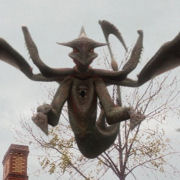
In his Doctor Who pitch document of December 8th, 2003, Davies indicated that one story -- denoted simply as “Rose's father” -- would predominantly serve as a character piece, with minimal effects work. His idea was that it would feature Rose repeatedly observing her dad's death in 1987 while the Doctor, in 2005, heard the chronicle of the man's life from her mother. Davies had approached Cornell about writing for Doctor Who during the autumn, and he was formally commissioned for the “Rose's father” slot in early 2004. Cornell saw Rose's dad as being akin to his own father, who had struggled for years to establish a successful career. Since this story was intended to be the eighth of the thirteen episodes comprising Season Twenty-Seven, there was some discussion about keeping the Doctor out of the script altogether. This would provide the new lead actor -- who was still uncast -- with a break approximately halfway through the production schedule, although the notion was not pursued. Afraid that viewers would become numb to watching the father die again and again, Cornell persuaded Davies that they should invert the plot by having Rose save her dad, creating a crisis in time. Another change championed by both Cornell and executive producer Julie Gardner was the inclusion of a monster. Jane Tranter, the BBC's Controller of Drama Commissioning, had also advised Davies that she felt that his pitch document was lacking in this very respect. In response, Davies suggested that Cornell's script could feature a diminutive race of creatures similar to the Gravelings, tiny goblinoid beings who had appeared in the series Dead Like Me. Cornell developed the Reavers, whom he originally envisaged as being small dinosaur-like monsters. They subsequently became more akin to the Grim Reaper of folklore, shrouded in a cowl with one hand emerging from its folds to wield a scythe. Cornell's initial storyline was called “Broken Time”. Here Pete died in 1987 after being struck by a lorry in the process of saving five-year-old Rose when she stepped off the sidewalk. The adult Rose saved her younger self instead, triggering the Blinovitch Limitation Effect -- first mentioned in 1972's Day Of The Daleks -- which anticipated disaster should an individual make contact with their past or future self. The Doctor, Rose and Pete retreated to a nearby pub, where time was splintering. The building started displaying the architectures of different eras, while people from throughout history appeared. Warriors from the army of the first-century queen Boadicea attacked, while the Reavers starting eliminating the patrons. When the Reavers created a duplicate of Pete, the Doctor lured it in front of the lorry, restoring the timeline. But although the real Pete survived, Rose discovered that, in the revised history, he had divorced her mother when she was a teenager, and was no longer a heroic figure in her childhood.
Cornell's next version was called “Wounded Time”. It dropped the young Rose's presence at Pete's traffic accident, and replaced Boadicea's warriors with Neanderthals. Pete now sacrificed himself to restore history to its proper course. However, the production team had begun to feel that the narrative needed to be opened up beyond the narrow confines of the pub setting. As such, Cornell shifted the action to include material at the home of Sonny Kay, the father of Sarah, the bride whose wedding Pete was planning to attend. This changed again in the first draft script, which Cornell completed in mid-March, becoming a house owned by a woman named Ellie Pritchard. Rose was now a toddler in 1987. The Reavers had been renamed Vanishers and were becoming more bestial, with a bat-like hand. Davies still felt that the settings of “Wounded Time” were too limited, and he suggested that much of the action should be set in the church where the wedding was to take place, rather than the Pritchard house. Sarah's surname became Clark, while Sonny would now be the father of her groom, Stuart. For a time, the Vanishers became the Loken and shed the Grim Reaper image entirely, having heads that were just mouths surrounded by tentacles. They soon reverted to their previous description, however, at which point they were dubbed the Reapers. Cornell added several characters whom Davies had already established as living near the Tylers on the Powell Estate, including Mickey Smith and their neighbours, Bao and Ru, who would first appear in episode four, Aliens Of London. The Chinese couple was ultimately omitted at a late stage. Rose's age in 1987 was revised to make her an infant. For much of the adventure's development, Cornell tried to retain more of the temporal havoc of his original storyline. Stuart underwent rapid aging, becoming an old man, while Sarah's unborn child suddenly appeared as a teenaged girl, first called Julia and then Jessica. The weird phenomena prompted Sonny to try to sacrifice Sarah to the Reapers, only to fall victim to them himself. The TARDIS was initially made inaccessible behind a time barrier. Later drafts had it collapse in on itself, before Cornell adopted the simpler approach of its transformation into an ordinary police box. “Wounded Time” was scheduled to be made by director Joe Ahearne as part of Block Three alongside episode six, Dalek, and episode seven, The Long Game. The latter was eventually shifted to a different production block due to its substantial effects requirements. Ahearne hoped to cast Shaun Of The Dead star Simon Pegg as Pete Tyler but, when he proved unavailable, Shaun Dingwall was recruited instead. The Reapers provoked considerable disagreement amongst the production team, with some discussion about realising them practically rather than as computer animation. It was finally agreed to present the Reapers as flying animals, although their tails were made scythe-shaped to maintain an allusion to the Grim Reaper. All of the locations used for “Wounded Time” were found in Cardiff. Much of the work took place in and around St Paul's Church, which was dressed as St Christopher's; Ahearne's team was there from November 11th to 18th, omitting only the 14th. Part of the 17th was also spent on St Fagan's Street, where the TARDIS materialised, and Oakley Place, where the Doctor was seen walking back to his time machine after leaving Rose with Pete. Christopher Eccleston was suffering from the flu during the latter stages of the St Paul's shoot. The venue for November 19th was HTV Wales; its boardroom was used for the registry office, while the set for the Tylers' flat -- now redressed for its 1987 appearance -- was erected in the facility's studio. On November 22nd, the last week of filming for “Wounded Time” began on Heol Trelai, for material involving Pete's car. The rest of the day was spent back at HTV Wales for the footage of Jackie's bedroom in 1992. The TARDIS scenes were taped on the 23rd, at Doctor Who's studio home of Unit Q2 in Newport. On November 25th, Loudoun Square posed as the Powell Estate. Finally, the 26th concentrated on the sequences involving the young Mickey, with the child running along Llanmaes Street and playing in the playground at Grange Gardens. Shaun Dingwall's appearance was revealed in the pages of Doctor Who Magazine when its 351st issue was released on December 9th. In late February 2005, Davies renamed the episode Father's Day.
|
|
| Updated 3rd September 2021 |
| Return To | ||
|---|---|---|
| Main Page | Episode List | Season 27 |
| Previous Story: The Long Game | Next Story: The Empty Child / The Doctor Dances |
| Previous in Production: Dalek | Next in Production: The Long Game |