| Previous Story: The Mutants | Next Story: The Three Doctors |
| Next in Production: Carnival Of Monsters |
|
Serial OOO · Classic
Series Episodes 324 – 329: The Time Monster
The Master obtains the Crystal of Kronos and uses it to construct a machine which lets him manipulate time. He succeeds in summoning an Atlantean priest named Krasis to the present day, but his experiments also alert the Doctor to his machinations. The Master's goal is to gain control of Kronos, a Chronovore native to the time vortex. But Krasis reveals that the Master only wields a fragment of the true Crystal, which is held in Atlantis by King Dalios. With the almost limitless power of Kronos within his grasp, the Master plunges back into antiquity -- and the Doctor has no choice but to follow.
Although credited to “Guy Leopold”, The Daemons -- the finale of Doctor Who's eighth season -- was actually co-written by Robert Sloman and producer Barry Letts. Having been very pleased with the fruits of this collaboration, Letts invited Sloman to return for Season Nine. Sloman was asked to develop an adventure pitting the Doctor against the Daleks for the first time in several years. A storyline for “The Daleks In London” was commissioned from Sloman on May 25th, 1971. Not long after, however, Letts and script editor Terrance Dicks decided that the Daleks would be better utilised in Louis Marks' season premiere, which became Day Of The Daleks. “The Daleks In London” was scrapped. Nonetheless, Letts still wanted Sloman to write for Season Nine, and asked him to develop a new storyline under his original commission. This time, Letts was interested in an adventure more akin to The Daemons, featuring a mix of science-fiction and mythology. Other elements requested of Sloman were the involvement of the Master and the United Nations Intelligence Taskforce (UNIT), and an historical setting. The latter was suggested by the Official Doctor Who Fan Club, an organisation which had recently been reinvigorated when it was put in the hands of a teenaged fan named Keith Miller. Doctor Who had not ventured further back into the Earth's past since The Abominable Snowmen in 1967.
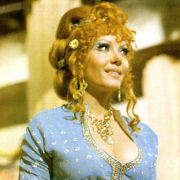
Sloman set to work on an idea called The Time Monster. Inspiration came during a walk outdoors, when he heard an airplane flying overhead and was reminded of the sound of German bombers during the Second World War. From this experience came the idea of “time slippages”, and Sloman envisaged a fleet of World War One biplanes descending on a modern-day aircraft. The scripts for The Time Monster were commissioned on December 28th; as with “The Daleks In London”, it was planned that this would be the season finale. Whereas The Daemons had been limited to five installments, Doctor Who had been granted an extra episode for its 1972 run, permitting the season to consist exclusively of four- and six-part serials. As Sloman developed his narrative, it was realised that budgetary considerations would prevent the First World War element from featuring prominently. Instead, it was decided to emphasise the Atlantis strand of the plot. A lost city referenced in two dialogues written by the philosopher Plato, Atlantis was likely allegorical in nature, but had nonetheless endured in popular folklore. Much as The Daemons had drawn its imagery from medieval legends about the Devil, Sloman therefore sought inspiration in Greek mythology. The name Kronos was a variant of Cronus, chief of the Titans, an elder group of deities said to be the progenitors of the more familiar Olympian gods; Cronus was subsequently identified by the Romans with their god Saturn. The Greek word thascalos, meaning “master”, suggested the evil Time Lord's new alias. Letts continued to work closely with Sloman, and saw The Time Monster as an opportunity to delve into the Doctor's background and motivations. Influenced by Buddhist philosophies, Letts wanted to portray the Doctor as being merely “semi-enlightened”: able to see the universe more clearly than most, but still possessing personal flaws. Letts' ideas were most prominently reflected in the Doctor's Episode Six tale about the hermit on his home planet. Having already directed Day Of The Daleks at the start of the season, Paul Bernard was quickly invited back to work on The Time Monster. It was his idea to have Kronos' final form be that of a young woman. Also returning for the first time since the Dalek story were the three UNIT regulars. Their contracts were issued during March 1972: Nicholas Courtney's on the 13th, John Levene's on the 22nd, and Richard Franklin's on the 31st. Production on The Time Monster started with two days at the BBC Television Film Studios in Ealing, London. Taking place on March 29th and 30th, filming concentrated on special effects shots and scenes in the labyrinth. The Minotaur was portrayed by Dave Prowse, who would go on to play Darth Vader in the first three Star Wars movies. Cast and crew then headed out on location, initially at Swallowfield Park in Swallowfield, Berkshire on April 4th and 5th for scenes at the Newton Institute. On April 6th, material in the woods was recorded at Mortimer Lane in Mortimer Common, Berkshire. This work was bookended by the filming of road scenes at two Hampshire locales -- Stratfield Saye Park in Stratfield Saye and School Lane at Heckfield Heath. At Stratfield Saye, stuntman Greg Powell, playing the knight who attacked the convoy in Episode Three, was thrown from his horse when his mount did not follow the planned route and collided with one of the UNIT vehicles. Accounts vary as to the extent of the injuries to both Powell and the horse. Equity, the actors' union, condemned the incident because budgetary limitations had prevented Bernard from hiring more than a single stunt driver. Additional road sequences were completed on April 7th, at both Stratfield Saye and the Old Church Farm in Hartley Wintney, Hampshire. While filming scenes in Bessie using a side-mounted camera, Jon Pertwee and Katy Manning realised that they had gotten lost. By the time the two actors were finally able to find their way back to Bernard, the director was already in the process of assembling search parties to track them down. Studio recording for the entirety of Season Nine was organised into fortnightly two-day sessions. Uniquely, however, The Time Monster was taped on Tuesdays and Wednesdays, rather than the usual Mondays and Tuesdays. The first session spanned April 25th and 26th, and took place at BBC Television Centre Studio 3 in White City, London. Bernard recorded Episode One on the Tuesday and Episode Two on the Wednesday. The venue for the second block, on May 9th and 10th, was TC4. It saw the introduction of a new set for the TARDIS console room, designed by Tim Gleeson. Unfortunately, the updated look failed to impress Barry Letts, who felt that the larger and more stylised roundels used by Gleeson resembled washing-up bowls. Letts' objections would turn out to be academic, as the set was damaged in storage over the summer, and would therefore appear only in The Time Monster. The Tuesday was chiefly devoted to Episode Three, although Bernard also chose to record the end of Episode Six -- the only scene in the final two installments which involved UNIT, the Newton Institute scientists, or the laboratory set. Likewise, the Wednesday saw the completion of not just Episode Four but also some TARDIS scenes for Episode Six. Although no one could have known it at the time, this session would be the last opportunity for the UNIT regulars to work alongside Roger Delgado in Doctor Who.
By the time of the final studio block, on May 23rd and 24th in TC3, it had been realised that Episode Four was underlength, while Episode Five was expected to be too long. As such, Episode Four was extended beyond the original cliffhanger of Kronos devouring the Doctor, to the Master jettisoning the Doctor's TARDIS in the time vortex. This material, along with most of Episode Five, was recorded on the Tuesday. The latter portion of the penultimate installment was taped alongside Episode Six on the Wednesday. A notable scene dropped before the recording of Episode Five depicted the Doctor activating a device in the TARDIS which permitted Jo to speak the language of the ancient Atlanteans; Doctor Who had never before attempted to explain how the Doctor's companions could speak foreign and alien tongues. May 24th brought an end to work on Season Nine, but not to the ninth production block. For the first time since 1968, it had been decided that an additional story would be taped prior to the summer break, to be held over until the next run of episodes the following year. As such, Jon Pertwee and Katy Manning immediately moved onto Carnival Of Monsters, which would eventually be broadcast as the second serial of Doctor Who's tenth season. There were various alterations made to the BBC Saturday evening schedule while The Time Monster was being broadcast. On May 20th, Episode One was followed not by The Wonderful World Of Disney but instead by a Tom And Jerry cartoon short, prior to that day's High Adventure film. This change was to accommodate a Morecambe And Wise Show special, which aired later that night. The following week, The Basil Brush Show -- which normally occupied the timeslot before a news update and Doctor Who -- was preempted due to an extended edition of Grandstand, featuring a Scotland versus England football match. As of Episode Five on June 17th, the evening's schedule was brought forward by five minutes, so Doctor Who began at 5.45pm. Instead of the Walt Disney anthology, it now led into the Western series Gunsmoke. On June 24th, another Tom And Jerry short was transmitted after the Doctor Who season finale, prior to the latest adventure of Marshal Matt Dillon.
|
|
||||||||||||||||||||||||||||||||||||||||||||||||||||||||||||||||||||||||||||||||||||||||||||||||||||||||||||||||||||||||||||||||||||||||||||||||||||||||||||||||||||||||||||
| Updated 13th August 2020 |
| Return To | ||
|---|---|---|
| Main Page | Episode List | Season 9 |
| Previous Story: The Mutants | Next Story: The Three Doctors |
| Next in Production: Carnival Of Monsters |